The 281 area code is a telephone area code serving the Houston, Texas metropolitan area and its environs. Look up any phone number starting with 281 area code. Results may include:
The 281 area code is heavily used for Social Security threats and fake process server scams. Fraudsters try to intimidate you into paying a debt by claiming you are about to be sued.
A robocall, often with a computer-generated voice or a person with a heavy accent, claims your Social Security Number has been suspended due to "fraudulent activity" or "suspicious activity," sometimes specifically mentioning drug trafficking in Texas. They threaten you with arrest, legal proceedings, or a warrant if you do not call back immediately to verify your information or provide the last four digits of your SSN. Some callers identify themselves as "Officer Marie Gomez." They use your SSN information to open new accounts and steal your identity. Your Social Security number cannot be suspended or cancelled. Real SSA agents communicate through official mail, not threatening robocalls.
"Robo call message left on my voice mail stated that I must call them immediately and verify my last 4 digits of my social security number. If I do not get back to them they will issue a warrant for my arrest."
Fake Legal Action & Process Server Scam
Scammers call claiming a "formal complaint" or "civil complaint" has been filed against you. They threaten to have uniformed officers serve legal papers at your home or place of employment, sometimes within the hour. They often provide a fake "case number" and instruct you to call a different number to resolve the matter. Many Houston-area callers harass family members as well, threaten to serve papers at your job and contact HR, mention a "pending matter" out of Harris County but won't give specifics, play sirens in the background of the call, and use vague but intimidating language like "good luck." They collect personal information including your address and workplace to sell to other scammers or use for identity theft. Real process servers do not call ahead to warn you. They are paid to find you and serve documents in person without prior notice.
"Started as an automated message of someone saying hello like he can't hear you... a real person takes over. Then he says he has uniformed police officers on the way to serve you. What idiot actually believes that we'll believe a processing company will warn you ahead of time?"
Aggressive Fake Debt Collector Threats
Callers, often identifying themselves as "Lisa Montgomery" or "Nicole Johnson," claim to be from a "check fraud unit" or "Economic Crimes Division." They are extremely rude and aggressive, threatening you or your family members with felony charges for old or bogus debts. They often call repeatedly and will curse at you or hang up when questioned. They threaten felony charges or extradition to Texas for an old civil debt, use abusive language, and demand immediate payment to avoid having you arrested. They steal your money through fraudulent payment demands for debts that don't exist or aren't yours. You cannot be arrested or charged with a felony for failing to pay a civil debt like a payday loan. Legitimate debt collectors cannot use abusive language or threaten you with arrest.
"Lisa Montgomery claiming to be from the check fraud dept left a VM for me to call back and pay to avoid going to court, Good luck a hole"
Whole Foods "Secret Shopper" Job Scam
A text message claims Whole Foods Market is hiring "store evaluators" for a research project in your area, offering high pay like $400 or $500 per assignment. If you respond, they send a large fake check via courier like DHL and instruct you to deposit it, then immediately buy thousands of dollars in gift cards, specifically American Express, and text them the card numbers. One scammer uses the name "Robert Zamora." They create urgency by offering a bonus to complete the task within 12 hours. They steal your money through the untraceable gift card codes while you become responsible for the bounced check. The check they send is fraudulent and will bounce a few days after you deposit it, but by then you have already sent the scammers untraceable money. You will be held responsible by your bank for the full amount of the bounced check.
"Yes I got a text message too about secret shopping and fell for it. Yesterday a DHL Pkg was delivered to me with a check in it to purchase American Express gift cards at three different stores, 500 dollars each and take 300 plus expenses for myself."
Tech Support & Firewall Renewal Scam
You receive a robocall claiming a subscription for computer security or a firewall is about to auto-renew. They frequently mention a specific charge, such as "$299" or "$290," that will be taken from your bank account unless you call them back to cancel. The caller has a heavy foreign accent but claims to be from a company like Microsoft, and they ask you to go to your computer and grant them remote access to "cancel" the charge or issue a "refund." They use the remote access to steal your personal information, install malware, or drain your financial accounts. Legitimate tech companies like Microsoft, Google, or Apple will not cold-call you about your computer's security status. Any renewal notices would come via email from an official address.
"Caller said my firewall was about to expire and $299 was going to be taken out of my bank account. And if I wanted to cancel, to call 281-305-6174. This is a scam."
Business Owner "Investigation" Scam
The caller, often from a noisy call center, asks to speak directly with the "owner or controller" about a vague "investigation." They refuse to identify their company or the purpose of the call and become aggressive or hang up when questioned by a receptionist. The call comes from a very loud, boiler-room style call center, and they hang up when asked for their company name or a reason for the call. They collect the owner's name and contact information for a future sales pitch or identity theft scam. Legitimate business is not conducted this way. A real investigator or official would not cold-call the front desk and refuse to identify themselves.
"Asked to speak with the owner or controller about an investigation. I know this is a scam because the caller id said telemarketer, plus we have received calls like this in the past. I am fed up with these people calling my office."
Fake Prescription Card Text
You receive an unsolicited text message, often with no words at all, just an attached image of a "Family Coverage" prescription plan card. The card contains a fake Rx Group ID and other numbers. The message contains no explanation or context, you do not recognize the prescription plan or insurance provider shown, and the text arrives at odd hours, like late at night or early in the morning. They use any information you provide to steal your identity or access your real health insurance accounts. Your health insurance or prescription provider will not send you a new insurance card via a random, unsolicited text message. This is always done through official channels like the mail or a secure patient portal.
"I got a stray text message with an image of a prescription plan card. It looks like an insurance card of some kind with 'Family Coverage' listed with an Rx Group ID and other random numbers on it. No other text was included..."
Recently Reported Area Code 281 Spam Calls
Area Code 281 phone numbers reported as unwanted calls to the FTC in the last 30 days.
(281) 727-6351
7 reports
·
(281) 968-5134
5 reports
·
(281) 404-9902
3 reports
·
(281) 519-0032
3 reports
·
(281) 918-8005
3 reports
·
(281) 710-0320
2 reports
·
(281) 789-6204
2 reports
·
(281) 378-8251
2 reports
·
(281) 359-9027
2 reports
·
(281) 786-0448
2 reports
·
Is area code 281 a scam?
No, 281 is a legitimate area code serving the greater Houston metropolitan region. Scammers spoof 281 numbers to reach Houston-area residents with calls that look like they belong to a neighbor.
Why do I get spam calls from area code 281?
Fake legal process server calls are elaborately staged here, claiming uniformed officers are en route while playing sirens in the background. Whole Foods secret shopper job scams sending fraudulent checks via DHL, and aggressive debt collectors using names like "Lisa Montgomery," are distinctly active in this market.
Where Is Area Code 281 Located?
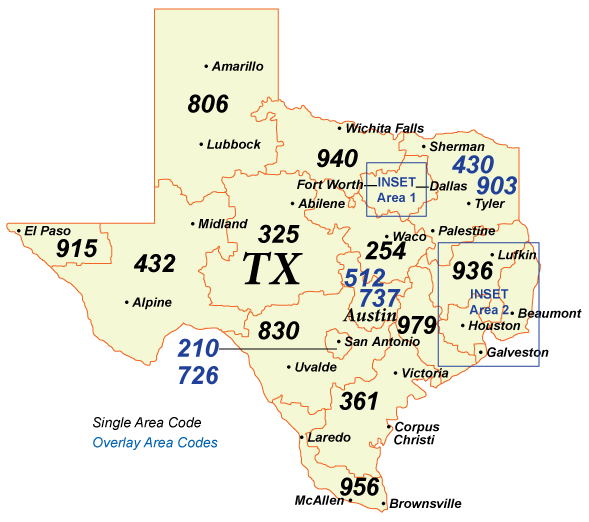
Area code 281 was created for most of Houston's suburbs, generally serving the area outside Beltway 8.
Counties Served:
Harris
Brazoria
Chambers
Fort Bend
Galveston
Liberty
Montgomery
Waller
Major Cities:
Houston
Pasadena
Baytown
Conroe
League City
Sugar Land
Pearland
Missouri City
Texas City
Friendswood
Galveston
Other Cities and Towns:
Addicks
Alvin
Arcola
Bacliff
Bellaire
Brookshire
Brookside Village
Bunker Hill Village
Channelview
Cleveland
Clodine
Crosby
Cypress
Deer Park
Dickinson
Overlay System
Area code 281 is part of an overlay complex with area codes
713
,
832
,
346
, and
621
in the Houston area. Area code 713 was one of the original four area codes established for Texas in 1947. Area code 281 was created in 1996. Area code 832 was added in 1999. Area code 346 was added in 2014. 621 was reserved as the fifth overlay code and implemented in 2025. Ten-digit dialing is mandatory for all calls in the Houston area.
Area Code 281 Location Map
Area code 281 is a general purpose code which was placed in service on November 2, 1996.