The 747 area code serves the San Fernando Valley region of Los Angeles County in California. Look up any phone number starting with 747 area code. Results may include:
The 747 area code is being used for Microsoft subscription fraud and fake arrest warrants. Criminals claim money was taken from your bank account to trick you into contacting them.
A robocall claims to be from the "Microsoft Support Team" and warns that your computer service subscription will auto-renew with a charge of $299 or $599 automatically deducted from your bank account. They tell you to call back immediately to cancel or get a refund, then ask you to visit websites like AnyDesk.com to give them remote control of your computer. They use this access to steal your banking information and drain your accounts. Microsoft does not call customers about subscription renewals and handles all billing through your online account.
"This call is from the Microsoft Support Team. Your computer service subscription will be auto-renewed. There will be an auto-deduction $299 from your bank account. In case you don't want to get charged, please call us to cancel your subscription."
Fake Arrest Warrant & Legal Action Scam
A computer-generated voice leaves an urgent voicemail claiming a "legal case" has been filed against you for "4 violations" or that there is a "suspicious trail" involving your Social Security number, threatening you will be "arrested by local police" if you don't call back immediately. They use your callback to extract personal information like your Social Security number or demand immediate payments to "resolve" the fake charges. Real government agencies never call to threaten arrest. They contact you through official mail first.
"Message stated: 'You are subject to arrest by local police for 4 violations if you do not call back.' A Definite Scam!"
Cable & Internet Provider Impersonation Scam
Scammers calling as "John" or "Otis" claim to be from your cable provider like Spectrum, AT&T, or Xfinity, offering large discounts on your bill or free equipment upgrades. They demand your account password or PIN to "verify your information" and require upfront payments like $99.99 or $199.83 to "activate" the discount. They use your account credentials to change your service plan, add expensive premium channels, or switch you to higher-cost plans without permission. Legitimate providers already have your account information and never ask for passwords over the phone.
"They claimed to be from AT&T offering a discount... He had my name, email, phone and address. However to offer a discount he needed to access my account and wanted my password. I refused."
Cartel Extortion Scam
Someone claiming to be "Pedro Mendoza" from the "CJNG cartel" sends texts and calls threatening to kill you and your family if you don't pay $2,000 or more, often including your name, family member names, and gruesome pictures of violence. They demand immediate wire transfers or payments to make the threats stop. The scammers get your personal information from public records or data breaches to make the threats seem real. The threats are designed to create extreme fear but are almost always empty.
"Got a call and text from a guy named Pedro mendoza who claims to be the CJNG OF CARTELS and if I don't pay $2k they will kill me and all of my family it also comes with great colorful pics of people getting killed."
Aggressive Phantom Debt Collection Scam
Callers from a supposed "litigation agency" contact you about a debt you don't recognize, using your maiden name or old address to seem legitimate, then become belligerent and threatening when you question the debt or refuse to provide personal information. They threaten to "serve you papers," contact your family and friends, and refuse to mail official debt validation as required by law. They use any personal information you confirm to steal your identity or create new fraudulent accounts. Legitimate debt collectors must follow the Fair Debt Collection Practices Act and cannot use abusive language or discuss your debt with third parties.
"Claims to be wanting my information to serve me legal papers... he got belligerent and asked for personal information, which I refused to give. He then became threatening and stated he would call friends and relatives if I did not provide him details."
Recently Reported Area Code 747 Spam Calls
Area Code 747 phone numbers reported as unwanted calls to the FTC in the last 30 days.
(747) 300-9294
3 reports
·
(747) 330-3369
3 reports
·
(747) 567-9513
2 reports
·
(747) 298-5544
2 reports
·
(747) 309-3137
2 reports
·
(747) 317-9004
2 reports
·
(747) 317-9640
2 reports
·
(747) 389-8248
2 reports
·
(747) 269-4503
2 reports
·
(747) 205-7163
2 reports
·
Is area code 747 a scam?
No, 747 is a valid California area code serving the San Fernando Valley region of Los Angeles. Unscrupulous call centers spoof this suburban prefix to bypass caller skepticism and increase their connection rates.
Why do I get spam calls from area code 747?
The San Fernando Valley faces intense telemarketing pressure and terrifying extortion attempts. Residents report menacing texts from "Pedro Mendoza" of the CJNG cartel demanding $2,000 to avoid violence, alongside fake Spectrum and AT&T technicians demanding $199 upfront activation fees for nonexistent bill discounts.
Where Is Area Code 747 Located?
The 747 area code covers the San Fernando Valley region of Los Angeles County, as well as portions of Ventura County.
Counties Served:
Los Angeles County
Ventura County
Major Cities:
Los Angeles (Neighborhoods/Districts within Los Angeles)
Glendale
Burbank
San Fernando
Calabasas
Agoura Hills
Westlake Village
Other Cities and Towns:
Arleta
Bell Canyon
Canoga Park
Chatsworth
Encino
Granada Hills
Hidden Hills
La Cañada Flintridge
La Crescenta-Montrose
Lake Balboa
Lake View Terrace
Malibu Lake
Mission Hills
Monte Nido
North Hills
Overlay System
Area code 747 overlays area code
818
. Area code 818 was created in 1984 from area code
213
. Area code 747 was introduced on May 18, 2009. All calls within the numbering plan area now require ten-digit dialing.
Area Code 747 Location Map
Area code 747 is a general purpose code which was placed in service on May 18, 2009.
Prefixes by Rate Center
Rate Center
Number of Prefixes
BRBN BRBN
5
CANOGAPARK
5
GLENDALE
4
NO HOLLYWD
3
NORTHRIDGE
3
SNFN SNFN
3
VAN NUYS
3
AGOURA
2
BRBN SNVY
2
PSDN LACN
1
RESEDA
1
Other California Area Codes
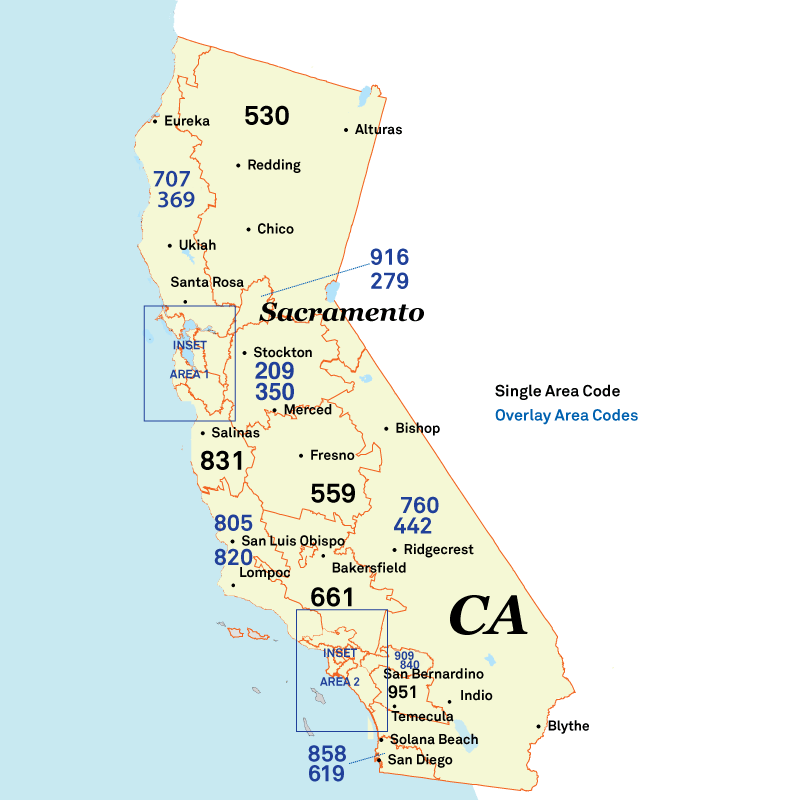
Browse California area codes for phone number lookup: