The 619 area code is a telephone area code serving most of San Diego County in California. Look up any phone number starting with 619 area code. Results may include:
San Diego's 619 area code is seeing a high volume of legal action threats and fake Medicare calls. Callers try to frighten you with lawsuits or trick you into giving up your health insurance information.
A robocall claims your Social Security Number has been used in fraudulent activity and will be suspended, then threatens an arrest warrant if you don't call back immediately. The recorded voice threatens you with an "arrest warrant" or "legal action," claims your SSN has been suspended or is involved in illegal activities, and callers identify themselves with fake law enforcement titles like "Officer Dennis Grey" or "Officer Richard Martin." You are told to "leave your work aside and dial" their number right away. They use your personal information to steal your identity and open accounts in your name. The Social Security Administration never calls to threaten you with arrest. They contact you through official mail.
"619-273-5074 left message that if don't call back with my SSN, they will issue an arrest warrant."
Fake Medicare & Health Insurance Calls
Scammers pretend to be from Medicare or another health insurance provider, claiming you need a "new plastic card" or that they must verify your information. The caller asks you to "verify" your Medicare number or SSN over the phone, mentions sending you a new "plastic" Medicare card, threatens that you won't be eligible for benefits if you don't comply, and calls often come very early in the morning, sometimes before 7:00 AM. They use your Medicare number and Social Security Number to steal your identity and file false claims for medical services. Medicare already has your information and will not call you to ask for it. Official communication comes through the mail.
"The female caller represented herself as working for Medicare and was calling to verify information, namely the numbers and letters on my Medicare card. I replied that if she was from Medicare, she should have the numbers and could read them to me and I would verify if they were right. Of course, she 'couldn't do that as a privacy matter'."
"Final Notice" Vehicle Warranty Robocalls
Automated recordings claim this is your "final notice" before your car's warranty expires, creating false urgency to trick you into buying expensive and often useless extended auto warranties. The call is an automated recording about your "auto warranty," they use high-pressure phrases like "final notice" or "last chance," the callers have no information about your actual vehicle or its warranty status, and they often call even if you don't own a car. They sell you overpriced service contracts that provide little or no actual coverage. These calls are not from your car's manufacturer or dealership. They have no idea if your actual warranty is expired.
".....your automotive warranty is about to expire...... My Cummins has 400k on it. Warranty, other than ECU, LONG GOONE!!!"
Phony Debt & Legal Complaint Threats
A robocall leaves a vague but threatening message stating a "complaint has been filed against you" or there are "pending matters," threatening to serve you with papers at home or work if you don't call back. The message vaguely mentions a "complaint" or "case number" without any specifics, they threaten to garnish your wages or serve you with legal documents, the caller may identify as "Client Services" or an "arbitration firm," and they often call relatives or your place of employment to harass you. They pressure you into paying for debts you don't owe to make the threats stop. Real process servers do not call ahead to warn you they are coming. They simply show up.
"They leave a message saying they are an arbitration form and that you are listed as the primary respondent in legal proceedings attached to your name and social security number. They say you need to call back on an 866 area code number or else they will make the final decision for you."
Tech Support and Amazon Impersonators
Scammers pretend to be from Apple, Microsoft, or Amazon, claiming there's been a security breach on your account or a fraudulent charge, such as a $500 purchase for an iPhone. You receive an unsolicited call claiming to be from Amazon, Apple, or Microsoft support, the caller claims your account has been compromised or there's a large, unauthorized charge, they ask you to go to your computer and grant them remote access, and the caller ID may be spoofed to say "Apple Inc" or another familiar name. They use remote access to steal your personal information and install malware on your computer. These companies will not call you out of the blue about account problems. Any legitimate security alert comes via official email or app notification.
"stated he was with amazon and was charging $500.00 to my account for an iPhone. The called me on my phone but I called on different phone not related to me. Big time scam,"
Name Verification Robocalls ("Press 5")
A robocall states your name and instructs you to press a number, usually "5," to confirm that it is you or that you live at this number. An automated voice states your name and asks you to confirm it by pressing a key, the call provides no context or reason for why they need this confirmation, and the message often says if you don't live there, you can hang up. They sell your confirmed, active number to other telemarketers and scammers who know a real person answers at this number. By pressing a key, you tell scammers a real person with this name lives at this number. They then sell your confirmed information to other scammers.
"Female Robo caller voice said my name, said press 5 if you live here or hang up if you don't and we won't call you again."
Recently Reported Area Code 619 Spam Calls
Area Code 619 phone numbers reported as unwanted calls to the FTC in the last 30 days.
(619) 309-1148
4 reports
·
(619) 962-5318
4 reports
·
(619) 649-8077
3 reports
·
(619) 215-8954
2 reports
·
(619) 932-4928
2 reports
·
(619) 353-9636
2 reports
·
(619) 391-3686
2 reports
·
(619) 482-2624
2 reports
·
(619) 780-3226
2 reports
·
(619) 877-6421
2 reports
·
Is area code 619 a scam?
No, 619 is a San Diego area code, genuine and fully in service for the city, Chula Vista, and El Cajon. San Diego's large military and retiree population makes it a particularly attractive target for fraud, and spoofing a local prefix gets more calls answered.
Why do I get spam calls from area code 619?
San Diego's substantial senior and military communities make them frequent targets for callers using spoofed 619 numbers. Social Security impersonators threatening arrest warrants unless victims call back with their SSN are the dominant complaint, and Medicare callers offering free plastic replacement cards who immediately request Medicare numbers and personal details are a persistent secondary pattern.
Where Is Area Code 619 Located?
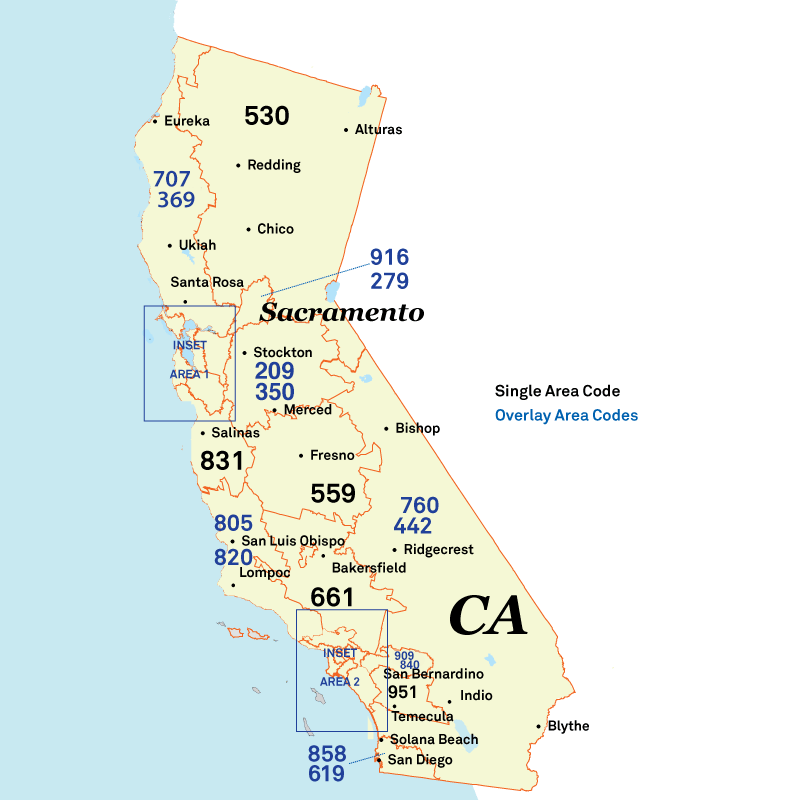
Area code 619 covers most of San Diego County in California.
Counties Served:
San Diego County
Major Cities:
San Diego
Chula Vista
El Cajon
La Mesa
Lemon Grove
National City
Poway
Santee
Solana Beach
Coronado
Del Mar
Imperial Beach
Other Cities and Towns:
4S Ranch
Alpine
Bonita
Bostonia
Boulevard
Campo
Carmel Mountain Ranch
Carmel Valley
Casa de Oro-Mount Helix
Clairemont
Crest
Descanso
Dulzura
Granite Hills
Harbison Canyon
Overlay System
Area codes 619 and
858
serve the same geographic region as an overlay. Area code 619 was created in 1982. Area code 858 was introduced in 1999. Ten-digit local calling became mandatory in June 2018.
Area Code 619 Location Map
Area code 619 is a general purpose code which was placed in service on January 1, 1982.
Prefixes by Rate Center
Rate Center
Number of Prefixes
SNDG SNDG
310
CHULAVISTA
94
EL CAJON
69
LA MESA
48
NATIONALCY
30
CORONADO
18
HARBSNALPN
7
JACUMBA
4
CAMPO
3
DULZURA
3
PINEVALLEY
3
LA JOLLA
1
POWAY
1
Other California Area Codes
Browse California area codes for phone number lookup: