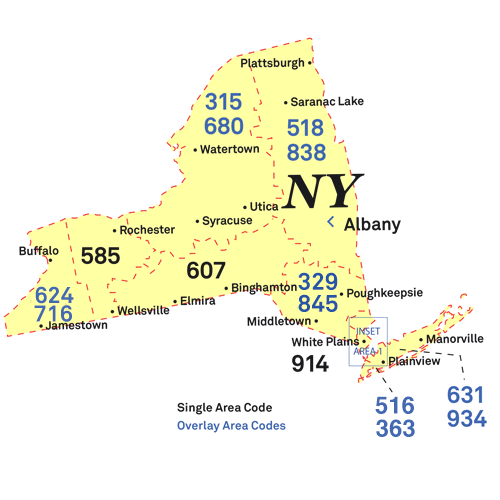
The 332 area code is a telephone area code serving most of the borough of Manhattan in New York City. Look up any phone number starting with 332 area code.
Scammers using the 332 area code are targeting victims with fake student loan forgiveness offers and phony debt collection calls. They try to steal your personal data by promising to erase your loans or threatening legal action.
The "Incomplete Application" Student Loan Forgiveness Scam
Scammers leave urgent voicemails claiming your application for loan forgiveness is "incomplete" and must be submitted before a "forbearance deadline." They use names like "Marissa Martin" or "Julia Birch" and provide a fake "approval code" like 213005 to seem legitimate. They mention benefits are "first come first serve" and create false urgency about missing deadlines. They collect your personal information and financial details to steal your identity or charge you for services that are already free through the government. Official federal student loan servicers will contact you through their official websites and U.S. Mail, not with unsolicited robocalls from random New York City numbers demanding immediate action.
"Hi this is Marissa Martin I'm following up regarding your eligibility for loan forgiveness it looks like your application is incomplete and needs to be submitted before the end of the forbearance deadline it's urgent that you return the call to complete your application... please be sure to provide your approval code 213005 when speaking to your counselor to expedite your call thank you and have a wonderful day…"
Phony Debt Collector & Legal Action Threats
Callers pretend to be debt collectors for companies like "American Express" or use vague terms like a "pending legal matter" to scare you. They often refuse to name their company or provide written validation of the debt, use a "nasty" or aggressive tone, and mention a lawsuit or legal action without any prior mailed notice. They may even harass your family members at their phone numbers. They use your personal information to confirm details about fake debts and pressure you into making payments on accounts that don't exist. Legitimate debt collectors are required by the Fair Debt Collection Practices Act to identify themselves and provide you with information about the debt.
"Very sketchy call from someone speaking about a 'pending legal matter' - I've received these before and whenever I Google the number, it turns out to be a number with many complaints."
Fake Rewards & Billing Alerts from Major Brands
You receive a text message pretending to be from a well-known company like Verizon, AT&T, or Amazon. These messages claim your bill is paid and offer a "little gift," that you have "$130 Amazon Rewards credit," or that you've won AirPods. They contain strange, unofficial-looking links like "yzpv3.info" and may address you by a wrong name. The links lead to websites that steal your login credentials and personal information. Companies like Verizon and Amazon do not send rewards through random text messages with unofficial links.
"Text message reads VZN Free Msg: December bill is paid. Thanks. Here's little gift for you: yzpv3.info/w9FIWytWD6"
Relentless Robocalls & Silent Hang-Ups
This tactic involves receiving multiple calls a day, sometimes five or more, from similar 332 numbers. Scammers use "neighbor spoofing," changing the last four digits of the number to bypass call blockers. Often, the line is silent when you answer, or the call disconnects immediately. Blocking one number doesn't work, as they just call back from a slightly different one. They use this automated harassment technique to identify active phone numbers for future scams. Answering the call confirms your number is live and can lead to even more calls.
"i get calls continually from 332 223 4733 and 3854 and 4740, 4741, 4742, 4743, 4744, i try and block and i get another number from them."
The "James Dawson" Business Credit Scam
Callers identifying themselves as "James Dawson" claim you have been "preapproved" for a business line of credit. The calls often use a "double ring" method to get past robocall blockers and instruct you to call back a different number, usually in a completely different area code like 949. They trick small business owners into paying upfront fees for a loan that doesn't exist. Legitimate financial institutions do not make initial credit offers through unsolicited robocalls.
"Message comes from 'James Dawson' and tells listener to call back to 949-365-4020 to receive a business line of credit. BTW ~ They will never remove your number because they are not a Legit business."
Phishing Text with Fake Package Tracking
A text message arrives stating a "pkg. has been shipped" and provides a link to click for tracking. The message doesn't name the delivery company like UPS or FedEx and is sent to people who are not expecting any packages. It pressures you to click a strange-looking link to get information. The links lead to websites that steal your personal information and login credentials. Official carriers like USPS, UPS, and FedEx always include their company name and a legitimate tracking number in notifications.
"Text saying pkg. has been shipped, gave a site to click on but I didn't. No business name, etc., just the phone no. plus I'm not expecting any packages."
Recently Reported Area Code 332 Spam Calls
Area Code 332 phone numbers reported as unwanted calls to the FTC in the last 30 days.
(332) 240-4917
5 reports
·
(332) 245-1004
3 reports
·
(332) 877-9314
2 reports
·
(332) 206-2147
2 reports
·
(332) 254-9116
2 reports
·
(332) 283-9321
2 reports
·
(332) 256-9640
2 reports
·
(332) 222-4352
2 reports
·
(332) 287-7921
2 reports
·
(332) 208-9857
2 reports
·
Is area code 332 a scam?
No, 332 is a legitimate New York City area code serving Manhattan. A Manhattan caller ID commands attention nationwide, which is exactly why scammers spoof it to ensure their calls get answered.
Why do I get spam calls from area code 332?
Student loan forgiveness fraud is heavily documented here, with callers like "Marissa Martin" leaving urgent voicemails claiming loan applications are incomplete. Neighbor spoofing cycling through 332-223-XXXX sequences, and phishing texts impersonating Verizon and AT&T, are also highly common.
Where Is Area Code 332 Located?
Area code 332 serves most of the borough of Manhattan in New York City.
Counties Served:
Not Specified
Major Cities:
Manhattan
Other Cities and Towns:
Marble Hill
Overlay System
Area code 332 is part of an overlay complex with area codes
212
,
646
, and
917
. Area code 212 was the original code assigned in 1947. Area code 646 was added in 1999, and area code 332 was added in 2017. Area code 917 overlays the entire New York City area.
Area Code 332 Location Map
Area code 332 is a general purpose code which was placed in service on June 10, 2017.
Prefixes by Rate Center
Rate Center
Number of Prefixes
NWYRCYZN01
7
Other New York Area Codes
Browse New York area codes for phone number lookup: