Phone Number Lookup by Utah Area Code
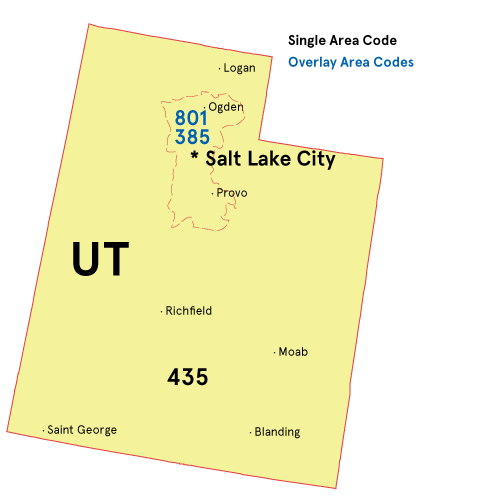
Utah has three area codes. Salt Lake City and Provo use 801 and its overlay, 385, while St. George, Logan, and the rest of the state use 435.
- 385 Phone Number Lookup: Salt Lake City, West Valley City, Provo, West Jordan
- 435 Phone Number Lookup: St. George, Logan, Tooele
- 801 Phone Number Lookup: Salt Lake City, West Valley City, Provo, West Jordan
Utah has approximately 4.2 million active phone numbers. Cell phones are the most popular with about 3.6 million users, while traditional landlines are declining with only 137,000 connections across the state. Internet phone services account for approximately 528,000 numbers.
Utah Phone Scams & Numbers Reported for Spam Calls
Recently Reported Utah Phone Numbers
Utah phone numbers recently reported for making unwanted sales calls or robocalls:
| Phone Number | FTC Complaints | Last Reported |
|---|---|---|
| (801) 204-6601 | ||
| (435) 339-6877 | ||
| (801) 503-0494 | ||
| (801) 438-8160 | ||
| (801) 386-5456 | ||
| (801) 686-8816 | ||
| (801) 326-4988 | ||
| (385) 564-0577 | ||
| (435) 245-5336 | ||
| (801) 591-9053 |
Common Phone Scams Targeting Utah Residents
- 'Colorado Tech' Xfinity Application Malware: Third-party imposters offering $5 TV upgrades but requiring customers to download malicious 'streaming applications' to their devices.
- University Federal Credit Union (UFCU) Phishing: Callers possessing a victim's address claiming overdue UFCU payments, hanging up immediately when cross-verified by branch staff.
- Davis County 'William Cartwright' Process Server: Scammers leaving 48-hour lawsuit deadlines, claiming they cannot legally leave legal documentation on a porch.
- Discover Card Debt Collection Harassment: 385 area code callers waking residents at 8 AM daily for fake Discover Card debts, asking for random individuals like 'Jacob A. Spaulding'.
- Utah Division of Consumer Protection: (801) 530-6601
Monthly Spam Call Complaints Reported to the FTC
In September 2026, Utah residents filed 2,001 complaints to the FTC about phone numbers making unwanted calls and text messages, up 21% from the previous month.
Look Up Phone Numbers by Utah City
Check unknown numbers reported by locals and find phone numbers for police, hospitals and other local services in the largest cities in Utah.
- Salt Lake City Phone Lookup & Directory
- West Valley City Phone Lookup & Directory
- Provo Phone Lookup & Directory
- West Jordan Phone Lookup & Directory
Verify Government Callers with Official Utah Phone Directory
Got a call from someone claiming to work for a Utah government office? Check it at the source with Utah State Employee Directory.
Utah State Employee Directory
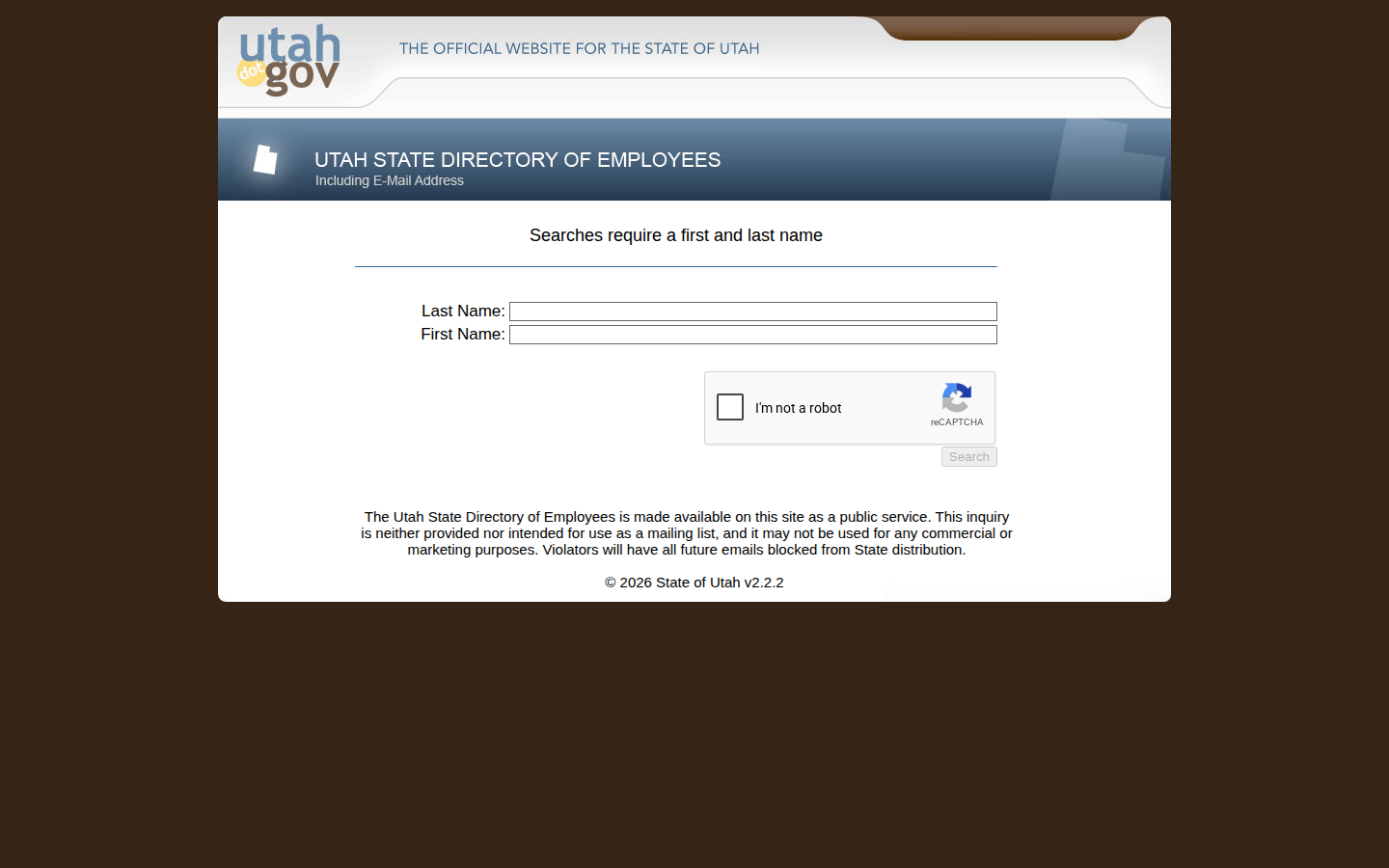
The Utah state employee directory looks up a Utah state employee's phone number by name. Both last name and first name are required. You can't browse by agency or search a surname on its own.
That works fine for checking one caller. Ask for their full name, search it, and if they're listed, contact them through the directory instead of your call log. The state provides it as a public service and bans commercial or marketing use.
Is Reverse Phone Lookup Legal in Utah?
Yes. Utah does not restrict the personal use of reverse phone lookup services. The state's privacy law has been in effect since December 31, 2023, though it is more limited than the laws in neighboring states. The Fair Credit Reporting Act (FCRA) prohibits using lookup results for employment, tenant, or credit decisions nationwide. Utah's UT-CPA provides some additional state-level rights, with notable limitations.
Your Privacy Rights as a Utah Resident - and Their Limits
The Utah Consumer Privacy Act (UT-CPA, Utah Code Ann. § 13-61 et seq., enacted SB 227, 2022, amended 2025) has been in effect since December 31, 2023. Utah's law is deliberately business-friendly in two important ways: it does not include a right to correct inaccurate data (unlike California, Colorado, Virginia, and most other state laws), and nonprofits are generally exempt. Residents can opt out of personal data sales and targeted advertising, and have rights to access, delete, and port their data within a 45-day window.
The absence of a correction right is a practical limitation: if a lookup service holds inaccurate information about you, Utah law allows you to request deletion but not to compel the service to fix the record.
Utah Phone Number Search FAQ
How to opt out of phone number lookup websites in Utah?
Under the Utah Consumer Privacy Act (UCPA), you can opt out of the sale of your personal information and targeted advertising. Visit each reverse lookup site and use their opt-out form or privacy settings to submit a request.
How to verify a Utah phone number belongs to a real business?
Phone numbers can be spoofed to appear as though they belong to legitimate companies. Although Utah has over 93,706 business establishments reported by the U.S. Census, you should verify the business name by searching the Utah Business Search.
What kind of phone numbers does Utah use?
Utah has 3.6 million mobile subscriptions, 528,000 VoIP numbers, and 137,000 landlines.
- US Phone Number Lookup
- / Utah