Connecticut Phone Numbers Reported to the FTC
Connecticut phone numbers recently reported (last 30 days) for making unwanted sales calls or robocalls:
| Phone Number | FTC Complaints | Last Reported |
|---|---|---|
| (203) 604-0196 | ||
| (203) 409-1338 | ||
| (475) 218-0655 | ||
| (860) 606-4775 | ||
| (860) 334-6292 | ||
| (203) 303-9648 | ||
| (860) 413-1286 | ||
| (860) 381-8007 | ||
| (475) 380-6261 | ||
| (203) 599-4873 |
In June 2026, Connecticut residents filed 2,401 complaints to the FTC about phone numbers making unwanted calls and text messages, up 0% from the previous month.
Common Phone Scams in Connecticut
- Eversource & UI Utility Shutoff: Scammers spoofing Eversource or United Illuminating, calling late Friday afternoons to threaten 30-minute power disconnection unless paid immediately via Zelle or gift cards.
- 'Magazine Plaque' Business Phishing: Callers referencing a 'That's Great News' local publication feature to bypass gatekeepers and sell overpriced laminated plaques, while harvesting direct employee emails.
- Aetna / Silver Script Impersonation: Callers with heavy accents spoofing 'Aetna Medicare' to trick members into revealing personal info to resolve fake 'late payments' or claim higher-tier memberships.
- 'V-Tech Solutions' Antivirus Renewal: Voicemails from 'Dennis Morris' or 'Daniel Parker' threatening a $399 auto-renewal charge for antivirus software, leading to a remote access trap.
- 'Ronald' Loan & Stimulus Scam: Robocalls from a 'senior loan advisor' offering American Rescue Plan stimulus funds or grant money to steal personal and financial data.
Connecticut Department of Consumer Protection: File a regional report directly with state authorities by calling (800) 842-2649.
Connecticut Phone Number Lookup by Area Code
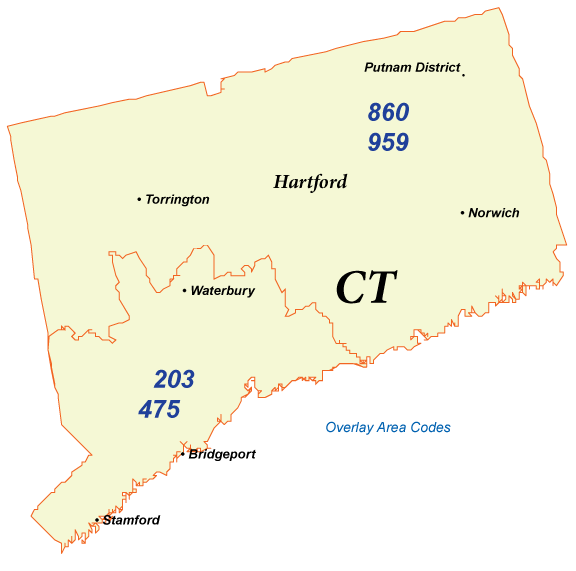
Top cities covered by each CT area code to help you start your reverse phone number search:
| Area Codes | Cities |
|---|---|
| 203/475 | Bridgeport, New Haven, Stamford |
| 860/959 | Hartford, New Britain, West Hartford |
Phone Number Statistics: Cell Phones vs Landlines
Connecticut has approximately 5.5 million active phone numbers. Cell phones dominate with 4.3 million users, while traditional landlines are declining with about 212,000 connections statewide. Internet phone services account for roughly 991,000 numbers.
| Voice Subscriptions (thousands) | June 2023 | Dec 2023 | June 2024 |
|---|---|---|---|
| Mobile telephony | 4,207 | 4,272 | 4,307 |
| Local exchange telephone service | 282 | 232 | 212 |
| VoIP subscriptions | 1,003 | 964 | 991 |
| Total | 5,492 | 5,468 | 5,510 |
Is Reverse Phone Lookup Legal in Connecticut?
Yes. Connecticut does not restrict the personal use of reverse phone lookup services, and residents benefit from one of the more actively enforced state privacy laws in the country. The Fair Credit Reporting Act (FCRA) prohibits using lookup results for employment, tenant, or credit decisions nationwide. Connecticut's CTDPA builds on these federal protections.
What Connecticut's Privacy Law Means for Lookup Services
The Connecticut Data Privacy Act (CTDPA, Pub. Act 22-15, as amended by Pub. Act 23-16) has been in effect since July 1, 2023 and was strengthened again in 2025. Connecticut residents can opt out of the sale of their personal data and targeted advertising, and have rights to access, correct, delete, and port their information - all with a 45-day response window. Nonprofits are generally exempt.
What distinguishes Connecticut is active enforcement: the state Attorney General published a public compliance enforcement report in early 2024, one of the first state AGs to do so. Businesses operating in Connecticut know enforcement is real, which in practice tends to improve compliance with opt-out requests.