Reverse Phone Lookup by Colorado Area Code
303 and 720 overlap throughout Denver, 719 serves Colorado Springs and the south, while 970 covers mountains and northern regions. The table below breaks down which codes serve which cities. When an unfamiliar Colorado number calls, don't guess based on the area code.
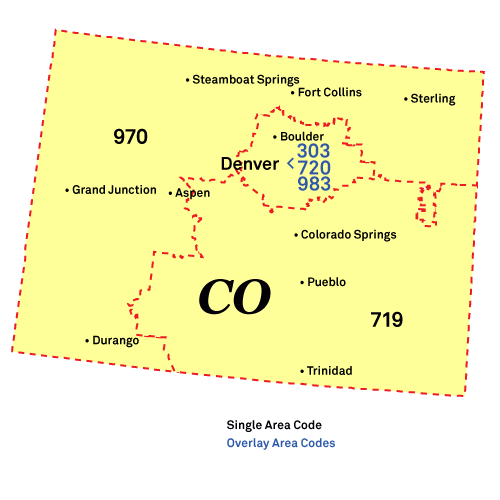
- 303 Phone Number Lookup: Denver, Aurora, Lakewood, Thornton, Arvada, Westminster, Centennial
- 719 Phone Number Lookup: Colorado Springs, Pueblo, Security-Widefield
- 720 Phone Number Lookup: Denver, Aurora, Lakewood, Thornton, Arvada, Westminster, Centennial
- 748 Phone Number Lookup:
- 970 Phone Number Lookup: Fort Collins, Greeley, Loveland
- 983 Phone Number Lookup: Denver, Aurora, Lakewood, Thornton, Arvada, Westminster, Centennial
Colorado has approximately 8.2 million active phone numbers. Cell phones are the most popular with 6.6 million users, while traditional landlines are declining with 360,000 connections statewide. Internet phone services account for about 1.2 million numbers.
Colorado Phone Numbers Reported to the FTC
In September 2026, Colorado residents filed 5,014 complaints to the FTC about phone numbers making unwanted calls and text messages, up 3% from the previous month.
Colorado phone numbers recently reported for making unwanted sales calls or robocalls:
| Phone Number | FTC Complaints | Last Reported |
|---|---|---|
| (719) 314-3825 | ||
| (970) 987-1914 | ||
| (970) 896-0489 | ||
| (720) 383-4446 | ||
| (970) 977-2278 | ||
| (970) 427-5073 | ||
| (303) 586-7980 | ||
| (720) 206-2151 | ||
| (720) 721-3278 | ||
| (719) 272-7200 |
Look Up All Numbers to Avoid Common Phone Scams in Colorado
- Xcel Energy Disconnection Threat: High-pressure robocalls threatening Xcel Energy customers with a 30-45 minute power shutoff for a past-due bill, demanding immediate payment via 'press 1' menus.
- Arapahoe/Boulder Sheriff Jury Duty Warrant: Impersonators like 'Deputy Osborne' claiming victims missed jury duty and must pay a $1,000 bond via a cash card to avoid immediate arrest.
- Fake FedEx Delivery Verification: Callers named 'Albert' or 'Zalma' asking residents to confirm addresses and read back tracking numbers, directing them to call an 833 fake support line to steal information.
- Colorado Solar Rebate Robocall: Automated calls falsely claiming a new state mandate allows homeowners to get $4,000 rebates to switch to solar power at no cost.
- 'Tucker Group' Gatekeeper Scam: Rude, aggressive callers targeting businesses, demanding to speak with the owner by name and falsely claiming association with local entities like the Cherry Creek School District.
- Colorado Attorney General "Stop Fraud" Hotline: (800) 222-4444
Browse Colorado Phone Directories by City
Look up phone numbers and browse the phone directory for the largest cities in Colorado.
- Denver Phone Lookup & Directory
- Colorado Springs Phone Lookup & Directory
- Aurora Phone Lookup & Directory
- Fort Collins Phone Lookup & Directory
- Lakewood Phone Lookup & Directory
- Thornton Phone Lookup & Directory
- Arvada Phone Lookup & Directory
- Westminster Phone Lookup & Directory
- Pueblo Phone Lookup & Directory
- Centennial Phone Lookup & Directory
- Boulder Phone Lookup & Directory
- Greeley Phone Lookup & Directory
- Highlands Ranch Phone Lookup & Directory
Is Reverse Phone Lookup Legal in Colorado?
Yes. Colorado has no law prohibiting residents from using reverse phone lookup services for personal use, but it does have one of the more robust state privacy frameworks in the country. The Fair Credit Reporting Act (FCRA) prohibits using lookup results for employment, tenant, credit, or insurance decisions in every state. Colorado's state law adds rights on top of these federal minimums.
Your Privacy Rights as a Colorado Resident
The Colorado Privacy Act (CPA, Colo. Rev. Stat. § 6-1-1301 et seq.) took effect July 1, 2023 and was further amended in 2025. Colorado was the third state after California and Virginia to enact a comprehensive privacy law. The CPA requires covered businesses to honor opt-out requests within 45 days and gives residents the right to access, correct, delete, and receive a portable copy of their personal data. Colorado also requires businesses to support a universal opt-out mechanism - meaning residents can use a browser-level privacy signal to opt out across multiple services at once, without visiting each site individually.
Colorado supplements the CPA with a separate Biometric Information Privacy statute (HB 21-1189), giving residents additional control over fingerprint, facial recognition, and other biometric data. This does not directly affect phone lookup services but reflects the state's broader privacy-first approach. There is no blanket nonprofit exemption under the CPA, though general nonprofit status does provide a partial exemption.
Colorado Do Not Call List
Colorado ranks among the states with persistent telemarketing problems, but it also has its own No-Call List to fight back. You can add your number for free at ColoradoNoCall.com or by calling 800-309-7041. The state recommends registering on both the Colorado and federal lists for full protection.
FAQs About Phone Number Search in Colorado
How to opt out of phone number lookup services in Colorado?
Under the Colorado Privacy Act (CPA), you have the right to delete your personal information and opt out of its sale. Visit each reverse lookup site and submit a deletion request through their opt-out page.
How to confirm a Colorado business caller is real?
Getting a business name from a phone lookup is helpful, but verification is key. With over 181,963 business establishments in Colorado according to Census data, confirming the company through the Colorado Business Database is the safest approach.
What types of phone numbers are in Colorado?
Colorado has about 6.6 million mobile subscriptions compared to 1.2 million VoIP lines and 360,000 landlines. Mobile and VoIP together make up over 95% of all phone numbers.
- US Phone Number Lookup
- / Colorado