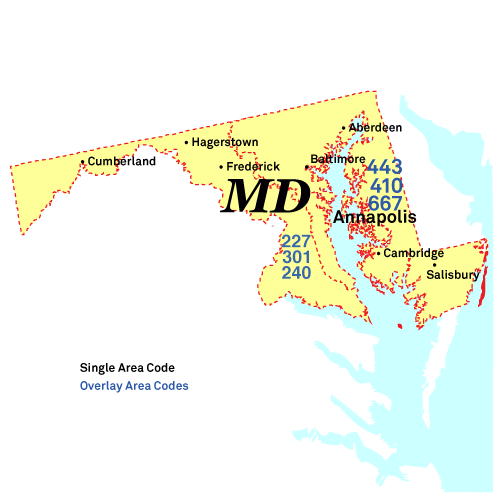
The 410 area code is serving the eastern half of Maryland, including the Baltimore metropolitan area and the Eastern Shore. Look up any phone number starting with 410 area code. Results may include:
Scammers with 410 numbers often use Social Security suspension threats and family emergency scams. They target seniors by pretending a grandchild is in trouble and needs cash for bail fast.
Scammers using names like "Officer Leeza Williams" call claiming fraudulent activities have been found on your Social Security Number. They threaten to suspend your number and arrest you if you don't call back immediately. The robocall warns of legal enforcement actions, asks you to press 1 to speak with an agent, and claims failing to call back is a habitual offense. They use your fear to steal personal information and money. Social Security numbers cannot be suspended or canceled. Real Social Security Administration staff communicate through mail, not threatening phone calls.
"A warrant has been released on your name due to legal enforcement actions filed on your social security number for fraudulent activities. To get more information about this case file and arrest warrant from federal database call immediately at our headquarters number 410-469-8084, I repeat 410-469-8084. Social security deputy officer is waiting for your call back."
Grandparent & Family Emergency Scam
A scammer calls pretending to be your grandchild or relative, claiming they were in a car accident and arrested for DWI. They sound frantic, beg for secrecy, and demand thousands in bail money through wire transfer. They might give you a separate number to call their fake attorney who uses names like "Mark Stevens" and asks for $8,900. They use your love for family to steal your money through fake emergencies. Real emergencies involve multiple family members calling you, not secret pleas for cash.
"My mother just received this scam call. It came from a local number, and she called her 'Mom' and said it was me, and knew my name. The woman was screaming and crying, saying she had been in a car accident and was blamed for it, and that she was at the court house and was detained."
Fake Lawsuit & Debt Collection Threats
Scammers call with vague threats about a case file or civil dispute filed against you. They threaten to escalate the matter, serve papers at your home in counties like Talbot County, or contact human resources at your job if you don't call back. Some claim to be from collection agencies like "CBE Group" about old debts but refuse to mail documentation. They use intimidation to get you to pay money you don't owe. Real process servers show up without calling first. Legitimate debt collectors must provide written proof when requested.
"Calls about every 2 weeks with a recorded message saying that there is a complaint against me and they will come to my house or contact human resources at my job if I don't respond."
Amazon & Apple Support Scams
Scammers call, text, or email about fake problems with your accounts. They claim fraudulent Amazon purchases for iPhone purchases of $999 or compromised Apple iCloud accounts. The caller ID shows spoofed names like "Apple Inc." and they instruct you to press 1 to cancel or call back immediately. Phony emails contain fake addresses like houses in the woods in South Carolina for Norton Security. They steal your login credentials and credit card information when you call back. Amazon and Apple handle security issues through their official apps and websites, never through unsolicited calls.
"I received TEN calls from 11:47 am to 2:37 pm on answering machine stating there was a security problem with my APPLE Cloud account. I have NO Apple products."
Fake Federal Agent & IRS Arrest Threats
Fake officers like "Officer Brenda Matthews" call claiming you're in trouble with the U.S. Treasury or IRS for tax evasion and tax fraud. The robocall threatens you will be taken into custody or must appear before a magistrate judge unless you immediately return the call. They demand you call back to speak with a federal agent and pay a fake tax bill. The IRS contacts taxpayers through official mail first, never threatening phone calls. Real federal agents do not call to demand immediate payment.
"This is Officer Brenda Matthews and I am calling you from the legal department of United States Treasury the purpose of this call is regarding an enforcement action which has been executed by the U.S. Treasury Department for tax evasion and tax fraud..."
Maryland Utility Bill Scam (BGE / Delmarva)
Scammers pose as BGE or Delmarva Power representatives offering special discounts to lower your bill. They ask you to grab your bill and read your account number to secure the savings. The caller ID shows unrelated names like "Choice One Urgent Care" and they pressure you to act quickly. They use your account number to switch your energy supplier without your permission. Your real utility company already has your account number and communicates discount programs through your bill or their official website.
"I also got a call from some condescending woman from 'AT&T', that there was some special energy discount coming to me, so 'go ahead and grab your bill and read your account number to me.' I asked her what should come up as their company on my caller ID, and she said, 'AT&T'. I said, 'Funny, it's coming up as 'Choice One Urgent Care'.'"
Recently Reported Area Code 410 Spam Calls
Area Code 410 phone numbers reported as unwanted calls to the FTC in the last 30 days.
(410) 621-4048
6 reports
·
(410) 965-1234
4 reports
·
(410) 929-8036
3 reports
·
(410) 844-0228
3 reports
·
(410) 304-7425
3 reports
·
(410) 621-4041
3 reports
·
(410) 587-6842
3 reports
·
(410) 697-5164
3 reports
·
(410) 470-7789
3 reports
·
(410) 848-2507
3 reports
·
Is area code 410 a scam?
No, 410 is a legitimate Maryland area code serving Baltimore and the surrounding region. The prefix is strongly identified with Maryland's largest city, giving calls that display it a sense of local familiarity that spoofers exploit.
Why do I get spam calls from area code 410?
The grandparent emergency scam is highly active here, with callers demanding thousands in bail wired through a fake attorney. BGE and Delmarva Power impersonators offering special bill discounts, and Social Security suspension robocalls using fake officer names, are also heavily reported.
Where Is Area Code 410 Located?
Area code 410 covers the eastern half of the state of Maryland, encompassing both the Baltimore metropolitan area and the Eastern Shore region.
Counties Served:
Baltimore
Baltimore County
Calvert
Harford
Most of Anne Arundel
Most of Carroll
Most of Howard
A small portion of eastern Frederick
Caroline
Cecil
Dorchester
Kent
Queen Anne's
Somerset
Talbot
Major Cities:
Baltimore
Other Cities and Towns:
New Windsor
Union Bridge
Overlay System
Area code 410 is part of an overlay system with area codes
443
and
667
, all serving the same geographic region. Area code 410 was introduced in 1991, 443 was overlaid onto the 410 territory on July 1, 1997 and area code 667 was implemented on March 24, 2012. Ten-digit dialing is required for all calls within this region.
Area Code 410 Location Map
Area code 410 is a general purpose code which was placed in service on October 6, 1991.
Prefixes by Rate Center
Rate Center
Number of Prefixes
BALTIMORE
169
TOWSON
37
ANNAPOLIS
34
CATONSVL
34
GLENBURNIE
26
SALISBURY
22
COLUMBIA
19
PIKESVILLE
17
SEVERNA PK
17
ELLICOTTCY
15
COCKEYSVL
14
EASTON
14
PARKVILLE
14
ELKRIDGE
11
Other
240
Other Maryland Area Codes
Browse Maryland area codes for phone number lookup: