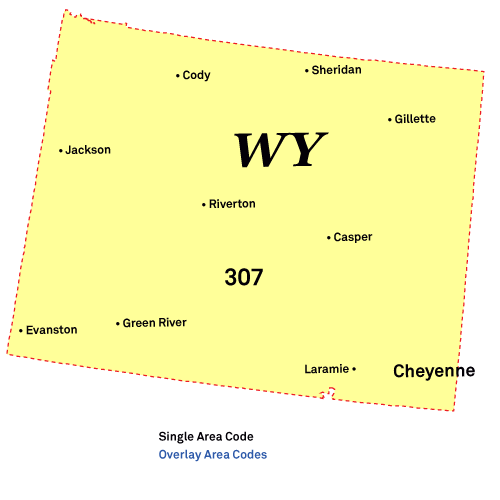
The 307 area code is a telephone area code serving the entire U.S. state of Wyoming. Look up any phone number starting with 307 area code. Results may include:
Scammers using the 307 area code frequently threaten victims with fake lawsuits or pretend to be the Social Security Administration. Their goal is to frighten you with arrest threats so you hand over cash or sensitive information.
Robocallers claim a civil lawsuit or pending matter has been filed against Wyoming residents. They threaten to actively pursue you at your home or place of employment, use intimidating phrases like "you have been officially notified," mention verifying your address and employment information, and pressure you to call back with a fake case file number like "BPF134672." They use your fear to trick you into paying for a non-existent debt. Real process servers do not call ahead to warn you or threaten you. They show up.
"This message is for (name said via computerized voice) I'm contacting you from the processing department. I received an order for you pertaining to two pending matters, unfortunately because I'm unable to reach you by phone I may be actively pursuing you at your place of employment and your residence... Your case file number is BPF134672... you have been notified."
Social Security Administration (SSA) Impersonation Scam
Scammers spoofing Wyoming numbers claim to be from the Social Security Administration or the "federal crime and investigation department." A recorded message threatens to suspend your Social Security Number for being used in a crime involving "drugs and cash" and demands you call back immediately at numbers like 307-222-6684 to avoid arrest or legal trouble. They use your Social Security number to open accounts and file fake tax returns in your name. The Social Security Administration primarily communicates by U.S. Mail. They will never call to threaten you or tell you that your SSN has been suspended.
"This is a call from Social Security Administration. By the federal crime and investigation department. We need to talk to you as soon as possible. Again this call is from Social Security Administration. Number to reach department is 307-222-6684. I repeat it's 307-222-6684. Thank you."
Aggressive Health Insurance & Medicare Sales
Callers using IDs like "Benefits Dept" or "Medicare DC" bombard Wyomingites with relentless health insurance and Medicare sales calls, sometimes 20-30 in a few days. They refuse to remove you from their list, become hostile when asked to stop, and continue calling even after you tell them they have the wrong person or are calling a minor. They use your personal information to sell you bad insurance plans or commit identity theft. Legitimate insurance agents and official Medicare representatives do not engage in harassment.
"In the span of a few days I have gotten 29 calls from this number. I have asked 3 different times to be removed from their list to no avail. They are trying to sell Health Insurance. Even asking to speak with a Supervisor does not work. They are very unprofessional."
Student Loan Forgiveness Scam
Scammers claim your student loans have been "flagged for forgiveness" due to new laws recently signed by the President. A caller, sometimes named "Charlotte," creates false urgency and pressures you to call back immediately to have your loans dismissed, even contacting people who have never had student loans. They collect your Federal Student Aid ID and password to access your real loan accounts and steal refund money. Official student loan forgiveness programs are managed by the U.S. Department of Education. There are no secret programs that require an immediate phone call to a third party.
"Left me a message telling me my student loans were flagged for forgiveness and to call them so I can get my loans dismissed/forgiven. I dont have any student loans."
The "Grandma, It's Me" Emergency Scam
A caller targets seniors by opening with a distressed "Grandma?" hoping you will say the name of a grandchild. The scammer then impersonates that grandchild, often claiming to be "Michael," says they are in trouble with the police, insists you not tell anyone else in the family, and demands you send money immediately through wire transfer or gift cards. They steal whatever money you send and may return asking for more. This scam preys on a grandparent's instinct to help. Always verify the story with another family member first.
"Just got a call, I also figured it was a scam. Grandma, Hi Grandma. I'm not your grandma, you have wrong #. This Is Michael, Your grandson. I don't have a Grandson. Get Lost!!!"
Unsolicited Junk Faxes
Wyoming businesses receive unsolicited junk faxes at all hours for roofing companies like "W&R Roofing," security systems, or bizarre international money laundering schemes claiming to be from a "former Minister in Zimbabwe." These faxes frequently lack a valid opt-out number or provide numbers that are not in service. They use your response to confirm your fax number is active and sell it to other scammers. Sending unsolicited fax advertisements is illegal under federal law.
"They fax us a note from a former Minister in Zimbabwe with a lot of money that wanted to give it to you to hold it LMBO! This is so ridiculous. They don't have anything else to do."
Recently Reported Area Code 307 Spam Calls
Area Code 307 phone numbers reported as unwanted calls to the FTC in the last 30 days.
(307) 205-1789
7 reports
·
(307) 216-6375
5 reports
·
(307) 384-7865
5 reports
·
(307) 205-8986
4 reports
·
(307) 289-4858
3 reports
·
(307) 205-8974
3 reports
·
(307) 215-8707
2 reports
·
(307) 417-6682
2 reports
·
(307) 205-5247
2 reports
·
(307) 292-9647
2 reports
·
Is area code 307 a scam?
No, 307 is a legitimate area code covering the entire state of Wyoming. Scammers spoof 307 numbers to appear local to Wyoming residents, bypassing the suspicion of an out-of-state call.
Why do I get spam calls from area code 307?
Social Security Administration impersonation calls claiming your SSN was used in drug trafficking or money laundering are heavily reported. Grandparent emergency scams pivoting to bail-money demands and student loan forgiveness robocalls targeting residents with no student debt are also widely active.
Where Is Area Code 307 Located?
The 307 area code serves the entire U.S. state of Wyoming. The numbering plan includes numerous communities across the state.
Major Cities:
Casper
Cheyenne
Cody
Gillette
Green River
Jackson
Laramie
Riverton
Rock Springs
Sheridan
Other Cities and Towns:
Afton
Albin
Alpine
Baggs
Basin
Big Piney
Buffalo
Burlington
Burns
Chugwater
Clearmont
Cokeville
Douglas
Dubois
East Thermopolis
Area Code 307 Location Map
Area code 307 is a general purpose code which was placed in service on January 1, 1947.