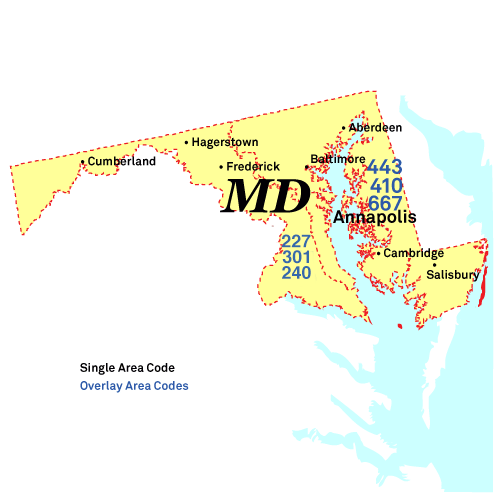
The 240 area code is serving the western part of Maryland, including Maryland's portion of the Greater Washington, D.C. metro area, portions of southern Maryland, along with rural western Maryland. Look up any phone number starting with 240 area code. Results may include:
Maryland's 240 area code is being used for Social Security suspension threats and IRS arrest scams. Callers pretend to be federal agents to scare you into handing over money or personal details.
Robocallers claim your Social Security Number has been compromised or used in suspicious activities in states like Texas or California. A recorded voice claims a legal affidavit has been filed to suspend your number and threatens arrest or frozen assets if you don't call back immediately. Callers with strong foreign accents claim to be from the Social Security Administration and demand you verify the last four digits of your SSN to better assist you. They use your confirmed SSN digits to steal your identity and open accounts in your name. The Social Security Administration will never call you to threaten suspension. They communicate through official U.S. Mail.
"we have received a legal affidavit to suspend your Social Security number on the media basis to get more information about this case file give us a call back on our number..."
Fake IRS Arrest Warrant Scam
Callers pretending to be from the IRS leave voicemails claiming a lawsuit has been filed against you and an arrest warrant will be issued if you don't comply. One caller identifying himself as William Martin demanded a Maryland resident go to CVS or Walgreens and pay $1,000 with a prepay card to avoid arrest. Fake agents like Jack Miller with foreign accents create extreme urgency, sometimes demanding payment within 45 minutes via prepay cards, gift cards, or wire transfers. They use the gift card numbers to drain the funds immediately. The IRS's first contact is always via U.S. Mail, never phone calls demanding gift cards.
"Person called wife saying he was with the IRS and threatened an arrest warrant would be issued if she didn't go the nearest CVS or Walgreens and get a $1000 prepay card."
Phantom Debt Collection & Legal Threats
Scammers calling 240 numbers pose as debt collectors or process servers, threatening legal action for old or entirely fake debts. They use fake names like Sarah Smith, claim a case has been filed against you, mention case numbers but refuse to mail official debt validation, and threaten to serve papers at your job or home. They claim you're forfeiting your rights if you don't cooperate and collect on debts you never had or debts from over 20 years ago. They use any personal information you confirm to create fake collection accounts and harass you further. Real process servers do not call ahead to warn you. They show up.
"They called me and told me a lender I never heard of is looking to garnish my wages. They had my full name and social security number."
Government Grant Scam
Callers claim you've been selected for a government grant for specific amounts like $9,000 or $14,566 from agencies like the US Treasury or National Institute of Health. They provide fake credentials like badge numbers for agents named Marlin Scott and demand you pay a registration fee of around $200 using wire transfer, MoneyGram, or eBay gift cards before receiving your money. They instruct you to make payments using gift cards or by going to Walmart. They steal your upfront payment and never send grant money. Real government agencies do not call citizens to award unsolicited grants or require processing fees via gift cards.
"Said they were calling from the National Institute of Health to tell me I have a $14,600 grant from the government. Wanted me to pay $200 registration fee."
Grandparent & Family Emergency Scam
Someone pretending to be a grandchild makes frantic calls claiming to have been in a car accident and arrested, desperately needing money for bail. They beg you not to tell their parents or anyone else, demand you send money via gift cards, and claim police will get involved if you don't pay. They use any money you send to fund their scam operation and never return it. Law enforcement agencies and courts do not accept bail money in gift cards. Real emergencies involve official paperwork and verified contact through proper channels.
"Called my father-in-law twice and told him my daughter had been in an accident and he needed to send money to take care of it or they would get the cops involved."
Auto Warranty Robocall Blitz
Pre-recorded messages warn that your vehicle's warranty is expiring and urge you to press 1 to speak with a specialist to avoid costly repairs. The automated recording starts with "We've noticed that your car's extended warranty..." and may offer a $1000 rebate to get you to renew. Callers don't know the specific make, model, or year of your car. They sell you overpriced and unnecessary service contracts that provide little to no actual coverage. These calls confirm your line is active when you press numbers, leading to more spam calls. Real warranty companies know your car details and contact you through official mail.
"Harassing Auto Warranty Scam call. I get about 30 of these a month, all from different numbers."
Recently Reported Area Code 240 Spam Calls
Area Code 240 phone numbers reported as unwanted calls to the FTC in the last 30 days.
(240) 428-7311
7 reports
·
(240) 353-1756
5 reports
·
(240) 690-2825
4 reports
·
(240) 885-6690
4 reports
·
(240) 258-3153
4 reports
·
(240) 260-5294
3 reports
·
(240) 672-0849
3 reports
·
(240) 650-9197
2 reports
·
(240) 905-4442
2 reports
·
(240) 570-6611
2 reports
·
Is area code 240 a scam?
No, 240 is a legitimate Maryland area code covering the Washington D.C. suburbs, including Silver Spring and Waldorf. Its proximity to the capital gives it the same government-authority appeal that makes scammers want to spoof it.
Why do I get spam calls from area code 240?
SSN suspension robocalls demanding you verify the last four digits of your number to "unlock" your file are frequently reported. Fake IRS arrest warrant calls demanding prepaid card payments from CVS within 45 minutes, phantom debt collection calls, and fake National Institute of Health grant calls are also well-documented.
Where Is Area Code 240 Located?
Area code 240 covers the western part of Maryland, including the Greater Washington, D.C. metro area, southern Maryland, and rural western Maryland.
Counties Served:
Allegany County
Charles County
Garrett County
Montgomery County
Prince George's County
St. Mary's County
Washington County
Frederick County (most of)
Howard County (western)
Carroll County (slivers of southwestern)
Anne Arundel County (western slivers)
Major Cities:
Frederick
Gaithersburg
Rockville
Bethesda
Silver Spring
Hagerstown
Cumberland
Germantown
Potomac
Landover
Waldorf
Other Cities and Towns:
Laurel
Marlboro (Upper Marlboro)
Mount Airy
Overlay System
Area code 240 is an overlay to area code
301
. Area code 301 was the original area code for the entire state of Maryland. Area code 240 was introduced on June 1, 1997. A third overlay code,
227
, was added on June 14, 2023. Ten-digit dialing is required for all calls within this region.
Area Code 240 Location Map
Area code 240 is a general purpose code which was placed in service on June 1, 1997.
Prefixes by Rate Center
Rate Center
Number of Prefixes
WSHNGTNZN3
56
WSHNGTNZN2
45
WSNGTNZN10
36
GAITHERSBG
30
FREDERICK
25
WALDORF
18
LAUREL236
17
WSHNGTNZN4
14
HAGERSTOWN
13
WSHNGTNZN5
12
ASHTON236
10
WSNGTNZN11
10
LEONARDTN
9
WSNG236Z13
9
Other
67
Other Maryland Area Codes
Browse Maryland area codes for phone number lookup: