Residents seeing calls from area code 208 are often targeted by Apple iCloud breach alerts and Social Security threats. The goal is to make you fear identity theft so you give up your personal information to fix the problem.
Robocallers claiming to be Apple Support flood Idaho residents with calls saying your iCloud account has been breached by foreign countries like Russia and Japan. The automated message shows caller ID as "Apple Inc" but comes from random spoofed numbers, making them impossible to block. Victims receive over 20 calls in a single day, with recordings that start playing immediately when you answer. The scammers want you to call back a 208 area code number to speak with an "Apple Support Advisor." They use any information you give them to access your real Apple account or steal your identity. Apple never calls customers about breached accounts. They send official emails and device notifications only.
"I have had 2 dozen calls from various numbers that all have the same message: my apple account has been breached, and to call this toll free number (208-262-0000). I do not have an I-cloud account... When I try to get a live person they hang up as soon as I say that I don't have an account."
Social Security Number "Suspended" Threat
Scammers calling from numbers with caller ID showing "Support Officer" claim to be from the Social Security Administration or federal agents. They say your Social Security Number has been compromised, used in a fraud case, or will be suspended, and threaten you with arrest if you don't act immediately. Many have heavy accents despite claiming to be U.S. federal agents. They demand payment through gift cards to "safeguard your accounts." They use your personal information and payment to steal your identity or drain your accounts. The Social Security Administration never calls to threaten suspension of your number or demand gift card payments.
"claimed my social security number was used in a fraud case and I was going to be arrested."
Threats of Legal Action and Arrest
Callers claim they received a "formal complaint" or "fax order" against you and will serve legal papers at your home or workplace. They make vague references to a "pending matter" without providing specifics, refuse to give their company name or mailing address, and threaten to contact your Human Resources department. They pressure you to verify your address or personal information to avoid "enforcement action." They use any information you confirm to commit identity theft or file fake lawsuits in your name. Real process servers do not call ahead to warn you. They show up and deliver documents.
"These ppl said that would be Pershing me at my residence and my place of business when I returned the call they told me I had two complaints against my name when I ask for their information and told them I was tracking the number they immediately hung up the phone..."
Fake Amazon Purchase Alerts
Robocalls and emails claim there's a problem with a large purchase on your Amazon account, typically mentioning expensive items like a MacBook Pro worth $1,269 or a PlayStation. The message creates urgency by saying your credit card will be charged unless you call their provided number immediately to cancel the fraudulent order. The number is not Amazon's official customer service line. Once you call, they trick you into giving them your credit card details or Amazon login information to "verify" your account. They use this information to make real purchases or steal your payment methods. Amazon never calls customers about suspicious purchases.
"I received an email for a Amazon order that has this number as their customer service number to call... My credit cards have not been billed. Your payment Mode: Credit/Debit Card Amount Due: $1,269.00 USD... Apple Mac Book Pro..."
"Last Chance" Car Warranty Calls
Robocalls start with a generic recorded message saying your car's extended warranty is "nearly expired" and this is your "last chance" or "final notice" to avoid being responsible for "expensive bills or payments." The caller cannot provide specific information about your existing warranty or vehicle details. They use publicly available vehicle registration information to target you. They pressure you into buying overpriced service contracts that often have limited coverage and high deductibles. These calls come from third-party sales companies, not your car manufacturer or dealership. Legitimate warranty companies do not use high-pressure robocall tactics.
"hello we are calling again to tel you this is your last chance to renew your car warranty, as it is nearly expired, if you do not renew it, you will be on your own to pay off any sort of expensive bills or payments"
Merchant Services Scam Targeting Businesses
Callers target business owners claiming there are urgent "changes to your merchant services account" or "risk matrix" that require immediate action. They refuse to give a clear company name, using generic terms like "Merchant Services" or claiming they are "above all banks" and work "at the national level." Names used include Michael Burgeon. They insist on speaking only with the owner and refuse to leave detailed messages or emails. They use any account information you provide to switch your credit card processing service without permission, often to companies with higher fees. Your legitimate processor always identifies themselves clearly and communicates changes through official statements.
"Same experience. 'Changes to merchant account'. When you ask what company he works for he just says 'I'm at the national level'. SCAM. Went by the name Michael Burgeon."
DOT Compliance Scare Tactic
Robocalls target businesses with DOT numbers, claiming they are "out of compliance" with their biennial update and face potential FMC fines unless they call back immediately to avoid penalties. The callers are from private third-party compliance companies, not the official Department of Transportation or FMCSA. They use your publicly available DOT registration information to make these targeted calls. They trick you into paying them for compliance services you can do yourself for free on the FMCSA website or have already completed. The DOT and FMCSA communicate through official mail, not threatening robocalls from private companies.
Automated calls flood Idaho phones with identical recordings stating "We are a Research Company that conducts in Political Surveys. We are not selling anything." The "Research Company" is never named, and the calls come frequently from a wide variety of 208 numbers using the exact same script. They use any response you give to confirm your number is active and add it to lists sold to other scammers and telemarketers. While legitimate political polls exist, they identify the polling organization by name. This anonymous robocall campaign builds active phone number lists for future spam.
"We are a Research Company that conducts in Political Surveys. We are not selling anything; We are only trying to get people's opinions which are very important to us."
Recently Reported Area Code 208 Spam Calls
Area Code 208 phone numbers reported as unwanted calls to the FTC in the last 30 days.
(208) 205-8876
109 reports
·
(208) 400-2014
4 reports
·
(208) 703-7435
3 reports
·
(208) 296-5010
3 reports
·
(208) 227-9072
3 reports
·
(208) 719-3280
3 reports
·
(208) 274-8446
2 reports
·
(208) 617-8021
2 reports
·
(208) 934-1132
2 reports
·
(208) 408-0448
2 reports
·
Is area code 208 a scam?
No, 208 is a legitimate area code covering the state of Idaho, including Boise, Nampa, and Meridian. Scammers spoof this prefix to make their high-volume automated campaigns look like local calls.
Why do I get spam calls from area code 208?
This prefix is heavily weaponized in Apple iCloud breach robocalls, with some residents receiving over twenty calls in a single day. DOT compliance scare calls targeting Idaho trucking and agricultural businesses, fake Amazon purchase alerts for MacBook Pros, and Social Security suspension threats also appear frequently.
Where Is Area Code 208 Located?
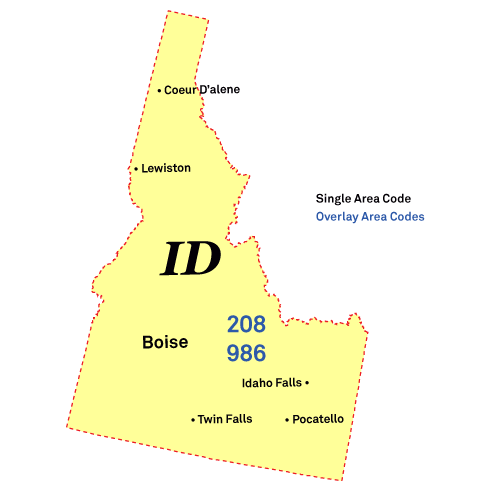
Area code 208 covers the entire state of Idaho. This includes Southern Idaho, centered in Boise and spilling into Nevada, Wyoming, and Malheur County, Oregon, as well as Coeur d'Alene, spilling into Montana and Washington. The Spokane, Washington LATA also spills into central Idaho.
Counties Served:
Major Cities:
Boise
Coeur d'Alene
Idaho Falls
Nampa
Meridian
Pocatello
Twin Falls
Lewiston
Rexburg
Moscow
Other Cities and Towns:
Aberdeen
Albion
American Falls
Arbon
Arco
Arimo
Ashton
Bancroft
Bayview
Bellevue
Bern
Blackfoot
Blanchard
Bliss
Bonners Ferry
Overlay System
Area code 208 is overlaid by area code
986
. Area code 208 was created in 1947. Area code 986 was added in 2017. Ten-digit dialing is mandatory across Idaho.
Area Code 208 Location Map
Area code 208 is a general purpose code which was placed in service on January 1, 1947.