Phone Number Lookup by Area Code
Twenty-plus area codes blanket California, from 213/323 in LA to 415/628 in San Francisco, 619/858 in San Diego, and beyond. The sheer number of overlays means area codes have lost most of their meaning. Browse the table below to see all codes and cities.
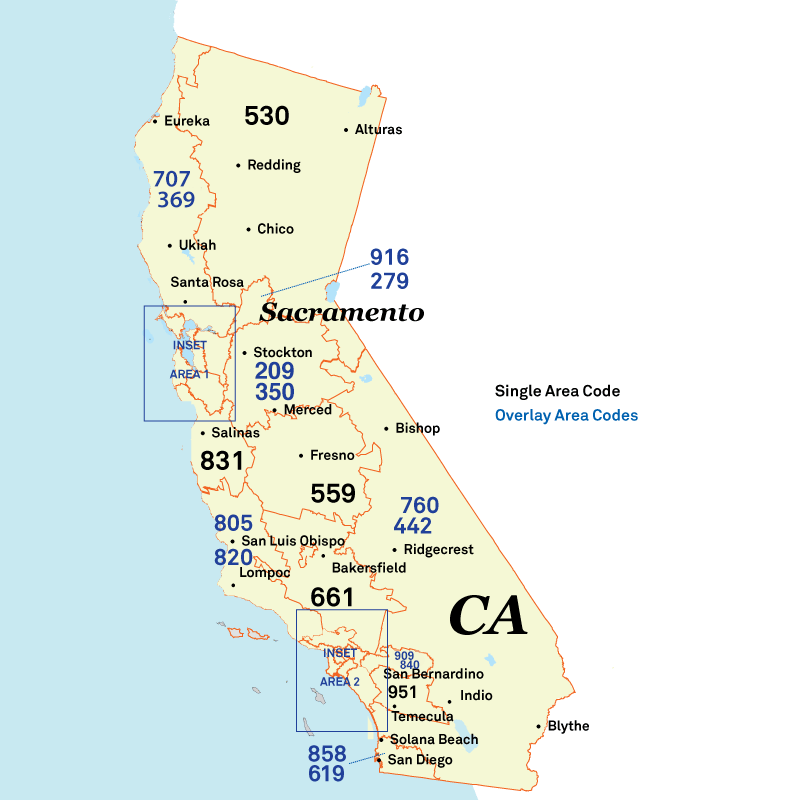
- 209 Phone Number Lookup: Stockton, Modesto, Tracy
- 213 Phone Number Lookup: Los Angeles, East Los Angeles, Inglewood, South Gate
- 279 Phone Number Lookup: Sacramento, Elk Grove, Roseville
- 310 Phone Number Lookup: Los Angeles, Torrance, Inglewood, Compton
- 323 Phone Number Lookup: Los Angeles, East Los Angeles, Inglewood, South Gate
- 341 Phone Number Lookup: Oakland, Fremont, Hayward, Berkeley, Richmond
- 350 Phone Number Lookup: Stockton, Modesto, Tracy
- 357 Phone Number Lookup:
- 369 Phone Number Lookup: Santa Rosa, Vallejo, Fairfield
- 408 Phone Number Lookup: San Jose, Sunnyvale, Santa Clara
- 415 Phone Number Lookup: San Francisco, Daly City, San Rafael, Novato
- 424 Phone Number Lookup: Los Angeles, Torrance, Inglewood, Compton
- 442 Phone Number Lookup: Oceanside, Escondido, Victorville, Carlsbad
- 510 Phone Number Lookup: Oakland, Fremont, Hayward, Berkeley, Richmond
- 530 Phone Number Lookup: Redding, Chico, Davis
- 559 Phone Number Lookup: Fresno, Visalia, Clovis
- 562 Phone Number Lookup: Long Beach, Downey, Norwalk
- 619 Phone Number Lookup: San Diego, Chula Vista, El Cajon
- 626 Phone Number Lookup: Pasadena, El Monte, West Covina
- 628 Phone Number Lookup: San Francisco, Daly City, San Rafael, Novato
- 650 Phone Number Lookup: Daly City, San Mateo, Redwood City
- 657 Phone Number Lookup: Anaheim, Santa Ana, Irvine, Huntington Beach, Garden Grove, Orange, Fullerton, Costa Mesa
- 661 Phone Number Lookup: Bakersfield, Santa Clarita, Lancaster, Palmdale
- 669 Phone Number Lookup: San Jose, Sunnyvale, Santa Clara
- 707 Phone Number Lookup: Santa Rosa, Vallejo, Fairfield
- 714 Phone Number Lookup: Anaheim, Santa Ana, Irvine, Huntington Beach, Garden Grove, Orange, Fullerton, Costa Mesa
- 738 Phone Number Lookup:
- 747 Phone Number Lookup: Los Angeles, Glendale, Pasadena, Burbank
- 760 Phone Number Lookup: Oceanside, Escondido, Victorville, Carlsbad
- 805 Phone Number Lookup: Oxnard, Thousand Oaks, Simi Valley
- 818 Phone Number Lookup: Los Angeles, Glendale, Pasadena, Burbank
- 820 Phone Number Lookup: Oxnard, Thousand Oaks, Simi Valley
- 831 Phone Number Lookup: Salinas, Santa Cruz, Watsonville
- 837 Phone Number Lookup:
- 840 Phone Number Lookup: San Bernardino, Fontana, Rancho Cucamonga, Ontario, Pomona
- 858 Phone Number Lookup: San Diego, Chula Vista, El Cajon
- 909 Phone Number Lookup: San Bernardino, Fontana, Rancho Cucamonga, Ontario, Pomona
- 916 Phone Number Lookup: Sacramento, Elk Grove, Roseville
- 925 Phone Number Lookup: Concord, Antioch, Livermore
- 949 Phone Number Lookup: Irvine, Costa Mesa, Mission Viejo, Newport Beach
- 951 Phone Number Lookup: Riverside, Moreno Valley, Corona, Murrieta, Temecula
California has approximately 57.9 million active phone numbers. Cell phones are the dominant service with 48.7 million users, while traditional landlines are declining with 1.6 million connections statewide. Internet phone services account for about 7.5 million numbers.
California Phone Numbers Reported to the FTC
In August 2026, California residents filed 22,813 complaints to the FTC about phone numbers making unwanted calls and text messages, up 5% from the previous month.
California phone numbers recently reported for making unwanted sales calls or robocalls:
| Phone Number | FTC Complaints | Last Reported |
|---|---|---|
| (369) 216-6437 | ||
| (369) 216-6437 | ||
| (369) 216-6437 | ||
| (840) 263-7620 | ||
| (619) 888-1149 | ||
| (369) 216-6437 | ||
| (925) 693-4915 | ||
| (626) 877-7833 | ||
| (669) 310-5700 | ||
| (369) 216-6437 |
Common Phone Scams in California
- Chinese Consulate Mandarin Robocalls: Relentless robocalls in Mandarin spoofing the Chinese Consulate in LA/SF or DHL, claiming visas are expiring or packages are undeliverable to extort the Chinese-American community.
- LADWP, PG&E, & SMUD Disconnection: Fake utility calls claiming a technician is en route to shut off power in 15-30 minutes, demanding payments like a $499 'smart meter security deposit' via Zelle.
- Blue Shield Child Info Phishing: Automated calls claiming to be Blue Shield with 'pertinent information' about a minor child (often knowing the child's name), attempting to extract the child's birthdate.
- Crypto Investment Texts: Unsolicited texts from 'Nick Nave' or 'Rafael Cox' promoting apps like 'CoinCircle', promising 8% APY or $200 daily returns on Bitcoin or Ethereum.
- The FaceTime Flasher: Disturbing late-night harassment (midnight to 4 AM) where unknown callers initiate FaceTime video calls and engage in indecent exposure.
- Real Estate Spam ('Alice' & 'Simply Sell'): Relentless texting campaigns from 'Alice' or 'Simply Sell' targeting 916 and 209 area code homeowners for lowball cash property sales.
- California Department of Consumer Affairs: (800) 952-5210
Is Reverse Phone Lookup Legal in California?
Yes. California law does not prohibit residents from using reverse phone lookup services for personal use - but California has by far the most comprehensive privacy framework in the US, giving residents tools that simply don't exist in most other states. The Fair Credit Reporting Act (FCRA) prohibits using lookup results for employment screening, tenant decisions, or credit and insurance underwriting in every state. California's state law supplements these federal rules; it does not replace them.
What California's Privacy Laws Mean for Lookup Services
California operates under the California Consumer Privacy Act / California Privacy Rights Act (CCPA/CPRA), in effect since January 1, 2020, with major CPRA amendments from January 1, 2023. What sets California apart is the 2023 Delete Act (SB 362), which directed the California Privacy Protection Agency (CPPA) to build a centralized Delete Request and Opt-Out Platform (DROP). The DROP became available to consumers on January 1, 2026, and data brokers are required to begin processing DROP deletion requests starting August 1, 2026 (Cal. Civ. Code §§ 7610–7616). That means Californians can submit a single request to remove their phone number and personal data from every registered data broker at once - a capability no other state currently offers.
Beyond the DROP, CCPA/CPRA gives California residents the right to opt out of the sale or sharing of personal information (§ 1798.120), access and correct data held about them, request deletion, and receive a portable copy. The 45-day response window applies. Unlike most state laws, CCPA/CPRA covers employees and B2B contacts in addition to consumers, and there is no blanket small-business exemption. Enforcement sits with the dedicated CPPA, not just the Attorney General.
FAQs About Reverse Phone Number Lookup in California
How to opt out of phone number lookup services in California?
Under CCPA/CPRA, you can request removal of your phone number and personal details from reverse lookup services. Visit each site and click "Do Not Sell or Share My Personal Information" to submit a deletion request.
How do I know if a California business phone number is legit?
A reverse phone lookup can provide a business name, but that alone does not confirm legitimacy. While California has over 1,023,181 business establishments based on Census data, you should verify the company by searching for it in the California Business Search.
Why does California have so many VoIP phone numbers?
California has 7.5 million VoIP subscriptions, more than the total phone subscriptions in most states. Tech adoption and remote work explain part of this, though mobile numbers still dominate at 48.7 million. Traditional landlines represent only 1.6 million.
- US Phone Number Lookup
- / California